

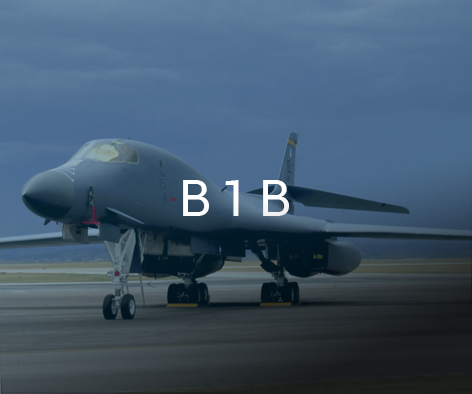
B1-BOMBER (B1B)
The B-1B Lancer was developed by Rockwell International, now Boeing Defense And Space Group, and is the US Air Force long-range strategic bomber. It was the replacement for the Boeing B-52 Stratofortress. The B-1 Lancer was designed by Rockwell International which is now part of Boeing. The development was delayed multiple times over its history due to changes in the perceived need for manned bombers. The Rockwell B-1 Lancer is a four-engine supersonic variable-sweep wing, jet powered heavy strategic bomber used by the United States Air Force (USAF). Since the U.S. Air Force received its first B-1B in 1984, the bomber has served the country as both a conventional and nuclear strike option. Over four years, 100 B-1Bs left Boeing’s factories, and 66 continue in operation today. The United States Air Force is using it still currently owning 62 (Test 2). B-1 has continually evolved to meet the demands of a rapidly changing battlefield.
GENERAL DATES
DATES WITH PIONEER
- 1974: First B1B Flight
- 1977: Original B1B Program Cancelled
- 1981: President Reagan revives the B1B program
- 1998: The first time the B1B is used in combat
- 2004: First B1B booking placed by 461-Northrop Grumman ES&SS
- 2006: 241-Ducommun LaBarge Technologies, Inc. – AR places its first B1B booking
- 2007: 446-Boeing Company places its first B1B booking
- 2009: No B1B bookings this year
- 2011: 161-Boeing Company – OK places its first B1B booking
- 2012: 196-Abaco Systems, Inc. places its first B1B booking
CUSTOMERS ON PROGRAM
SUPPLIERS
- 446-Boeing Company
- 161-Boeing Company – OK
- 461-Northrop Grumman ES&SS
- 241-Ducommun LaBarge Technologies, Inc. – AR
- 196-Abaco Systems, Inc.
- Boeing
ANNUAL REVENUE HISTORY
PROGRAM HISTORY
| Year | Extended Price |
| 2004 | 2,500 |
| 2005 | 0 |
| 2006 | 70,171 |
| 2007 | 18,587 |
| 2008 | 41,383 |
| 2010 | 57,644 |
| 2011 | 214,476 |
| 2012 | 1,102,036 |
| 2013 | 664,954 |
| 2014 | 714,123 |
| 2015 | 705,614 |
| 2016 | 562,725 |
| 2017 | 423,384 |
The B-1 Lancer is a swing-wing bomber intended for high-speed, low-altitude penetration missions. Its first flight was in December 1974, but by June 1977 the program was canceled. Four Rockwell International B-1As were built and used for flight testing with the final flight made in April 1981. In October, President Ronald Reagan revived the program as the B-1B. It first flew Oct. 18, 1984, could operate at 60,000 feet and had a range of more than 7,000 miles. The U.S. Air Force ordered 100 B-1Bs in 1982, and the first B-1B aircraft was delivered to the Air Force at Edwards Air Force Base, Calif., in October 1984, just 33 months after contract go-ahead. The last Rockwell B-1B rolled out of final assembly at Palmdale, Calif., on Jan. 20, 1988.
CURRENT & FUTURE NEWS
- The United States dropped an estimated 26,171 bombs in seven countries last year, which were 3,027 more than that of in 2015
- In the future, the Airforce will rely on the new Northrop Grumman B-21 Raider stealth bomber to ensure that it can hit targets around the globe inside even most heavily defended airspace
- The Raider is expected become operational by 2030.
- The Air Force hopes to buy a minimum of 100 Raiders, but in an ideal world would
prefer to have roughly 200 of the new stealth bombers - B52 and B1 bombers will be converted into Arsenal Planes